How Tennis Whites Became a Court Custom
Learn how tennis whites became a court custom, shaped by clothing choices and club expectations, and see how the tradition still varies by venue.
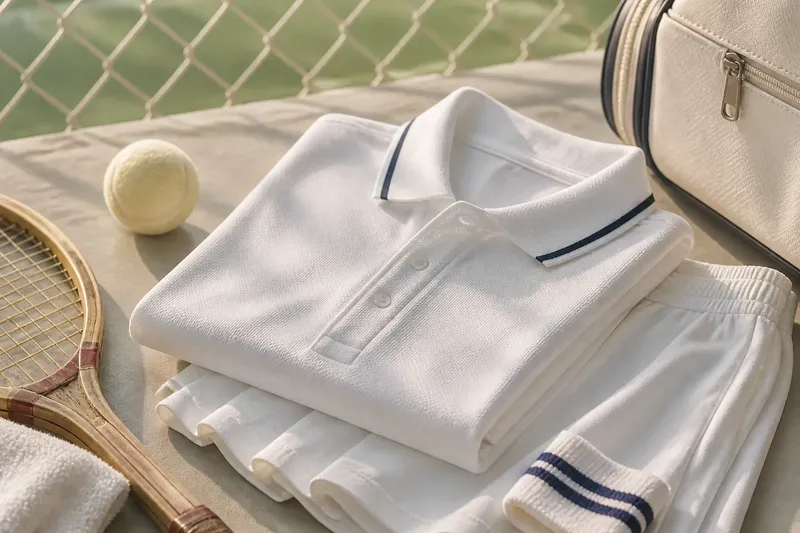
A visitor reaches a traditional club for a friendly match and pauses at the gate to check the dress rules. Tennis whites may look like a simple uniform, but their history is better understood as a custom that took shape through local habits and expectations—not as one universal rule introduced everywhere at once.
What did early lawn tennis players wear?
In the late nineteenth century, lawn tennis was often played in social settings where people dressed for public appearances as well as activity. Clothing varied, and it is difficult to describe one outfit as typical across all players and places. Men might wear long trousers, shirts, or jackets; women’s clothing often followed the period’s expectations for public dress, which could include long skirts and layered garments.
Those garments could restrict movement, but specialized sportswear was not yet the norm in every tennis setting. Players adapted their clothing over time, choosing lighter or less restrictive items where local expectations allowed.
White was one option among the colors used in warm-weather clothing. Without a specific club’s records, it is safer to describe its early presence as part of a broader fashion and social context than to claim that one practical benefit or rule explains its adoption.
Why did white become associated with tennis?
Several influences may have reinforced the choice. White could look neat in a social setting, and light-colored summer garments were already familiar in some contexts. At clubs where appearance mattered, a restrained outfit could fit the atmosphere members wanted to maintain.
These are broad explanations, not a single documented origin story for every club. The reasons could differ by place and period, and a club’s own records would be needed to explain exactly when and why its dress expectations formed.
Comfort, appearance, and social convention need not have been competing explanations. A clothing choice could feel suitable for warm weather and also look appropriate to a club. But without evidence tied to a specific setting, it is best to present these as plausible influences rather than settled facts about how the custom began.
How did a preference become a dress custom?
Local expectations can spread through imitation: players see what other members wear and follow suit. A club may later put its expectations into written guidance. The path from informal preference to explicit rule, however, is not necessarily the same at every venue.
Once a dress custom becomes part of a club’s identity, it can outlast the reasons members first favored it. Players may call white traditional without knowing whether their own club adopted it for appearance, comfort, or another reason. A familiar look can also reinforce an expectation: people dress in white because it is expected, and the repeated sight makes the custom seem natural.
Clothing itself has changed, even where a preference for white remains. Modern cuts and materials can differ from earlier garments while keeping the same general visual cue.
What changed as tennis clothing became more athletic?
Tennis clothing gradually moved toward garments designed for play rather than adapted from ordinary daywear. The details and pace of that change varied. Skirts, shirts, and shorts took on forms suited to movement, while the color expectations at some venues remained recognizable.
This distinction between garment and color helps explain how a club can accept newer clothing while retaining a preference for white. It does not mean every venue followed the same path. Some clubs have stricter dress rules; others allow colored details or have no special color requirement.
How can you check a club’s tennis whites rule?
Do not assume that the phrase “tennis whites” has the same meaning at every venue. Check the club’s current dress guidance before packing. If the wording is unclear, ask the club directly and follow the answer rather than relying on another venue’s custom.
- Check whether the rule says “all white” or “predominantly white”; if it says “all white,” choose garments without colored panels, then ask the club if an item’s trim is uncertain.
- Check whether colored trim is allowed; if the guidance permits it, select an item that stays within the stated limit, but choose plainer clothing if the wording is ambiguous.
- Check whether the rule applies to shirts, shorts, skirts, or all clothing; if it names specific garments, follow those terms, but contact the club if it does not say what is covered.
- Check whether the policy differs for social play and club events; if the event has separate guidance, follow that version, but ask the organizer if no event rule is posted.
- Check when the guidance was updated; if the page appears old or conflicts with current event information, contact the club before traveling rather than treating either source as definitive.
- Check whether shoes or accessories are included; if they are named, follow the stated condition, but ask the club if the wording leaves them out and you are unsure.
Say you are packing a white shirt with a narrow blue collar for a social match. The club’s current page says clothing should be predominantly white and permits colored trim, so you pack the shirt; if the page instead said “all white” or omitted trim, you would choose a plain white shirt or ask the club. That gives you a decision based on the actual wording, not a guess about what every traditional venue requires.
What questions do players ask about tennis whites?
Did tennis whites begin as a universal rule?
No single rule made white clothing mandatory across every court. The custom is better understood as a pattern of local preferences and expectations that developed in different settings.
Were tennis whites chosen only for comfort?
Comfort may have been one influence, but appearance and social convention may also have mattered. Without evidence from a particular club or period, no single explanation should be treated as definitive.
Does every tennis club require white clothing?
No. Dress rules vary by venue, and many courts have no special color requirement. Check the club’s current guidance before playing there.
Why does the custom remain as tennis clothes change?
A venue can keep a preference for white while allowing newer garment designs and materials. The color may remain as a recognizable part of local identity even as the clothing changes.
What can tennis whites mean today?
At one club, white clothing may be a written requirement; at another, it may be a preference or simply a familiar look. On a public court, players may choose any color allowed by the venue. The meaning depends on the setting, so the clothing alone cannot tell you exactly why a player chose it.
That is also why the history should be described carefully. Tennis whites emerged through changing clothing habits and local club cultures, but broad accounts cannot establish the exact origin of every rule. To learn why a particular venue adopted its policy, look for its own records or ask the club.
When you see a player in white, consider the venue before assigning meaning to the outfit. It may reflect a rule, a preference, or a connection to local tradition. And if you are visiting a club yourself, its current guidance—not the broad history of tennis whites—is the most useful place to start.